IT solutions & software
Custom websites, mobile applications and management systems, built end to end.
PhD Candidate · LCSI Laboratory · ESI Algiers
I build anomaly detectors for graphs that change over time — and I make them say why they flagged what they flagged.
01 — Research
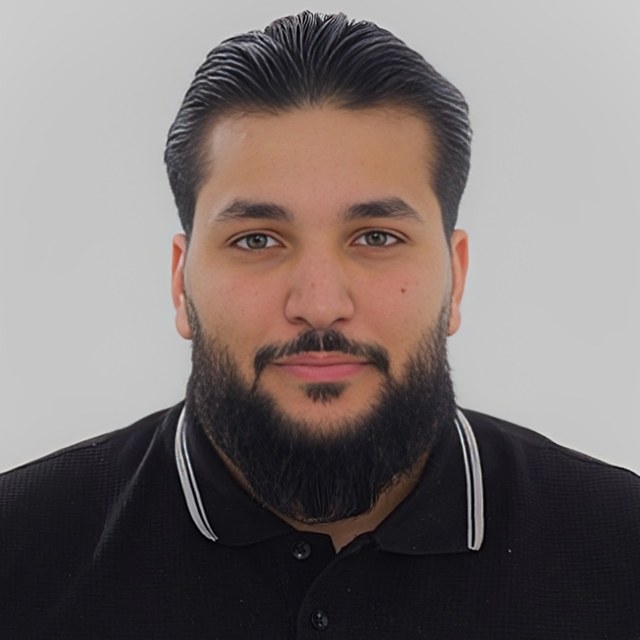
I am a PhD candidate in Artificial Intelligence at the Higher National School of Computer Science (ESI, formerly INI and CERI) in Algiers, within the LCSI Laboratory. My thesis is on anomaly detection in dynamic graphs using deep learning, and specifically on graph neural networks.
Transactions between accounts, connections between hosts, ratings exchanged between traders — these arrive as a stream, not a snapshot. Deep detectors have become good at scoring them. They have not become good at explaining themselves, and an analyst who cannot see which counterparty or which moment triggered an alert cannot act on it. That gap is what my work addresses.
Detectors whose explanation is the input to the decision, not a model fitted afterwards to guess at it.
Unified protocols for dynamic-graph anomaly detection, and the leakage channels that inflate published numbers.
Temporal transformers, enclosing-subgraph representations, and sparse selection over evidence.
Intelligent systems, smart-city applications, image processing and computer vision, with a growing focus on medical AI.
02 — Selected work
Statuses below are current as of this build. Verify before citing.
A detector whose anomaly score is computed only from a sparse evidence set it selects inside its own forward pass, so sufficiency holds by construction rather than by measurement.
A unified benchmark across detectors and corpora, and the finding that rankings established under synthetic anomaly injection do not survive contact with real labels.
A post-hoc framework that wraps a frozen transformer detector and returns, per flagged edge, which neighbour nodes and which historical snapshots drove the alert.
Architecture-matched attribution for structural, contrastive, recurrent and semi-supervised detectors — each pairing a specific detector with an explanation procedure evaluated under a shared fidelity protocol.
Full list on ORCID , Google Scholar and ResearchGate .
03 — Outside the lab
I hold a Computer Science engineering degree and a Master's from the University of Batna 2. Alongside the PhD I founded and run ALIAN Business Services, based in Sétif.
Custom websites, mobile applications and management systems, built end to end.
Property and consulting services, in collaboration with certified land experts (experts fonciers).
Visa application assistance and form-filling, handled properly the first time.
Find the office by searching “ALIAN by Iyad Assaad Nekka” on Google Maps.
04 — Contact
For research collaboration, reviewing, or anything about the work above, email is best.
 ORCID
ORCID